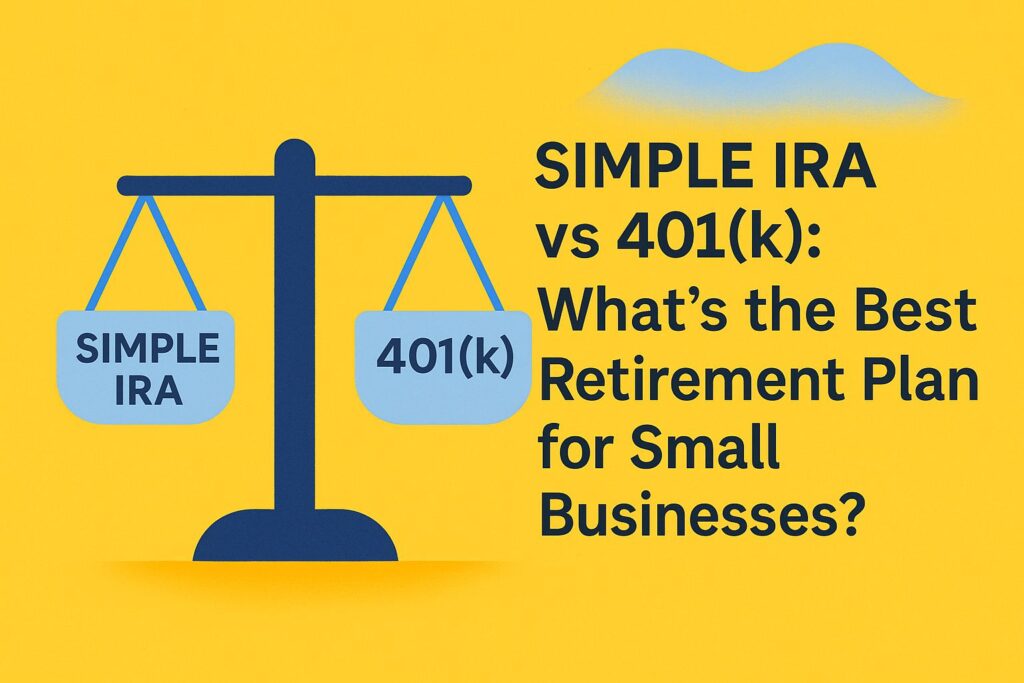
SIMPLE IRA vs 401(k): What’s the Best Retirement Plan for Small Businesses?
Choosing the right retirement plan can feel overwhelming for small business owners. Knowing the differences between SIMPLE IRA and 401(k) is important for planning your employees’ retirement and yours. This guide dives into the specifics of each plan, examining eligibility, contribution limits, and unique advantages. By the end, you’ll clearly know which option fits your business goals best. Let’s look at what each plan includes.
Overview of SIMPLE IRA

The SIMPLE IRA is a clear retirement savings plan for small businesses. It’s simple to handle and offers tax advantages due to employer contributions and various contribution choices.
Eligibility and Contribution Limits
To qualify for a SIMPLE IRA, businesses must have 100 or fewer employees and cannot maintain another retirement plan.
Employees need to have earned at least $5,000 in any two of the preceding years to meet plan eligibility criteria. For 2023, businesses can contribute up to $15,500 per employee, and those aged 50 and above can add an additional $3,500 catch-up contribution, enhancing their retirement goals.
You can easily set up a SIMPLE IRA with services like Guideline, starting at $39 per month. They handle the administrative workload, ensuring compliance requirements while allowing employers to focus on their core business operations and financial goals.
Overview of 401(k)

The 401(k) plan is a flexible retirement option that allows both employees and employers to add money for significant retirement savings and features tax deferral benefits.
Eligibility and Contribution Limits
Most businesses can offer a 401(k), with contribution limits set at $22,500 for 2023 and an additional $7,500 for employees aged 50 and above, accommodating various employee eligibility criteria.
To successfully implement a 401(k) plan, businesses need to meet a few criteria, including IRS regulations compliance. There’s no limit on the number of employees, but the company must perform yearly tests to make sure all employees receive fair contribution rates, which may include profit-sharing options.
Utilizing providers like Paychex, which starts at $50 per month, can simplify compliance by guiding businesses through these requirements and facilitating reporting.
Think about using automatic enrollment options to raise participation levels. Research shows that this can lead to a big rise in employee sign-ups.
Key Differences Between SIMPLE IRA and 401(k)
Knowing the differences between SIMPLE IRAs and 401(k) plans helps business owners make good choices that align with their financial goals and financial planning strategies.
Each plan meets different needs, so think about your exact situation and retirement readiness.
SIMPLE IRAs let employers add 2% of an employee’s salary without matching the employee’s contribution, which makes management easier and supports business growth.
In contrast, 401(k) plans permit higher contribution limits, such as $22,500 for individuals under 50, offering significant tax advantages and investment diversification.
When deciding, assess your team’s size and the complexity of your payroll; a SIMPLE IRA may be more beneficial for smaller teams and business structures, while a 401(k) suits larger companies aiming for higher employee participation and employee retention.
Advantages of Each Plan
Both SIMPLE IRAs and 401(k) plans offer unique advantages that can cater to different business needs and employee preferences, addressing diverse retirement strategies and retirement assets.
The SIMPLE IRA is particularly appealing to small businesses due to its ease of setup, requiring minimal paperwork and low administrative costs. Employer matching is not required, allowing businesses to adjust according to their financial status and changing economic conditions.
On the other hand, the 401(k) plan boasts higher contribution limits, allowing employees to save more for retirement income. Employers often offer matching contributions, which can significantly increase employee retention and job satisfaction because of better benefits and retirement savings.
Financial advisors often recommend assessing company size, revenue stability, and employee demographics to determine the most suitable retirement plan and funding options for achieving financial independence.
Considerations for Small Business Owners
Small business owners should consider different aspects when choosing a retirement plan, like management expenses, the age and details of their employees, and their financial aims and tax effects.
When looking at administrative costs, it’s important to compare what you pay with what you get. A plan costing $500 a year might not offer much, while spending $2,000 could give you better service. Employee demographics also play a role; for instance, younger workers may prefer options with a higher growth potential, while older employees might favor stability.
Current business profitability can influence how much the business owner can contribute to employee retirement plans and retirement savings accounts. Small business owners should make a list to review their choices:
- Assess total administrative costs,
- Analyze employee age distribution, and
- Review projected business profits for sustainable contributions.
By carefully weighing the costs, benefits, and administrative requirements, business owners can choose the retirement plan that best supports their employees and long-term goals. The right decision can foster loyalty, improve retention, and set the foundation for lasting financial security.
About the Author
Kim Anderson is a Harvard University graduate with a bachelor’s degree in Accounting and Finance. She’s the owner of a successful payroll outsourcing firm based in California and a contributing writer for My Payroll Outsourcing. With 14 years of experience, Kim helps businesses streamline compliance, minimize administrative risk, and manage multi-state workforces with confidence.